

Airsoft laws: what to check in your country
16 July 2026
1. What counts as a replica in the eyes of the law?
Across most jurisdictions, an airsoft replica is broadly understood as an object that looks like a firearm and fires a non-metallic projectile (the familiar 6 mm plastic BBs) at a limited muzzle energy. The precise wording, the categories and the energy threshold that separates a "toy" or "replica" from a "firearm" are set differently in each country — but the underlying logic is the same nearly everywhere.
In practice, as long as your replica stays under the limit set where you live, it's usually treated as a leisure item subject to clear but accessible rules. Once it goes above that limit, it can tip into the far stricter firearms regime. The key takeaway: the exact number that draws that line is not universal, so confirm it locally.
2. Muzzle-energy limits: the number that varies most
Most regulations revolve around muzzle energy, measured in joules. This is the single most important thing to understand — and also the thing that changes the most from one country or region to the next. There is no single worldwide figure.
On top of national law, individual clubs and fields set their own caps, often stricter, and split them by play style. As a rough illustration only:
| Play style (example) | Typical field cap (example) | What it means |
|---|---|---|
| Indoor / CQB (close quarters) | Around 1 J in some places | Lower limits because engagement distances are short. Yours may differ. |
| Outdoor / woodland | Around 1.5 J or more in some places | Higher caps are common for longer ranges. Yours may differ. |
| DMR / sniper roles | Higher, with a minimum engagement distance | Often allowed only with a longer safe distance rule. Set locally. |
Treat every figure above as an example that varies, not as the rule. Your country's law and your local field will tell you the real numbers you must respect.
3. The adjustability trap: worth knowing
Here's a point many beginners miss, and it genuinely matters in some places. In certain jurisdictions, a replica that can exceed the local energy limit by a simple adjustment, with no real mechanical modification (for example by tweaking the hop-up or the power), may already be treated as a firearm rather than an airsoft replica.
So it isn't only the power measured at a single moment that can count, but also the replica's capacity to cross the threshold without heavy work. In practice, commercial replicas built for airsoft are designed to stay within the usual limits — but keep this principle in mind if you're considering tuning or upgrades, and check how your own country treats it.
4. Buying a replica: age and online purchases
A very common rule is a minimum age to buy a replica — frequently 18, but it varies by country and region, and some places set it differently or add extra conditions. Where an age limit applies, the sale and supply of a replica to anyone below it is typically prohibited.
This usually applies both in physical shops and online: when you order over the internet, the seller may be required to verify the buyer's age, and you should be able to prove it. Packaging and manuals often carry mandatory notices (age restriction, safety warnings, an indication of the energy). Buying from a reputable specialist retailer is the best way to get a compliant, correctly labelled product — and to confirm what your country requires.
5. What about minors?
This question comes up a lot, and it deserves caution. While buying a replica is often reserved for adults, playing as a minor is a more nuanced topic: in many places it's possible under strict conditions (appropriate supervision, parental consent, a dedicated club setting), but the details vary widely from one country, region and venue to another.
Because this point is sensitive and can change, we'd rather not give a one-size-fits-all answer here. The right move: contact your national airsoft federation and a club near you, who can tell you the exact, up-to-date framework for your situation.
6. Marking and coloured tips
Because replicas look like real firearms, many countries have rules about how they must be marked or coloured. Some require a coloured (often orange) tip or a two-tone marking on the replica; others have distributor markings, importer requirements, or no such rule at all. This is one of the areas that differs the most between countries.
Before you import, buy or travel with a replica, check whether a coloured tip or specific marking is required where you live and where you'll play. Removing or altering a required marking can itself be an offence in some jurisdictions.
7. Transporting your replica properly
Getting your replica to the field is routine — as long as you follow a few common-sense norms that are also good practice almost everywhere. Your replica should travel:
- Inert: unloaded, with no BB chambered, ideally with no gas or firing battery engaged.
- Packed in a closed bag or hard case, so it isn't visible.
- Never on display in public: you don't walk around with a replica in hand or on your belt.
- Ammunition separate: carry BBs apart from the replica.
The general idea is to avoid any ambiguity: from a distance, a replica looks like a real firearm, and a visible replica can understandably alarm people and trigger a response. So transport it discreetly, from your car to the field — and check whether your country adds any specific transport rules.
8. Carrying in public: keep it off the street
A near-universal principle: openly carrying or displaying a replica in a public place is restricted or prohibited in many countries. Don't pull out your replica in the street, a car park, a public park or any other space open to the public. Airsoft is played on dedicated fields, private or set up for the activity.
Beyond any legal penalty, it's a matter of safety and image: a replica shown in public is the surest way to cause an incident. Keep the replica for the field, and only the field — and follow your local public-carry rules.
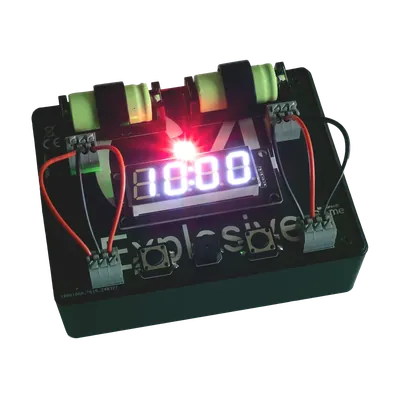
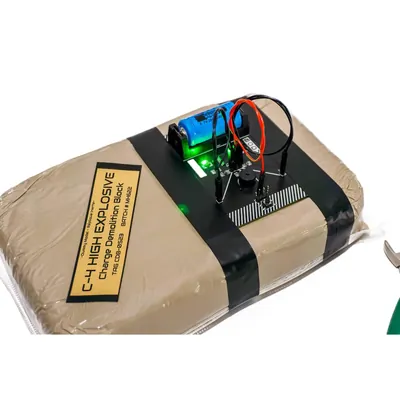
The same applies to scenario props. A fake bomb looks even more like the real thing than a replica does: never display it, carry it in the open or leave it anywhere outside a private field. In transit, keep it switched off, in a closed bag or case.
\r\n\r\n9. Eye protection: non-negotiable
This isn't an administrative rule, it's safety rule number one: certified eye protection is essential everywhere and mandatory on serious fields. A BB to the eye can cause a serious, irreversible injury — there's no flexibility on this.
You keep your glasses or protective mask on at all times in the play area, and never remove them to adjust anything until you're in a safe zone. Reputable venues refuse access to the field without compliant protection, and they're right to.
10. Local and official rules: always check
One last point that's easy to forget: beyond national law, regions, cities or local authorities can add their own rules on carrying and transporting replicas, or on the use of certain spaces. These provisions vary from one place to another.
Before organising a game at a new location, or if you have any doubt about your area, a quick look at the local rules and a question to a club near you will save you nasty surprises.
A question about your situation? 🎯
The My Airsoft Game team helps you play by the rules and choose compliant gear, right from the start.
Get advice? Frequently asked questions about airsoft laws
Is airsoft legal?
In most countries, yes — but the details differ everywhere. A replica typically fires a non-metallic BB at a limited muzzle energy, and above a certain power threshold it may be reclassified as a firearm. The exact limits, the age to buy, marking rules and transport rules vary by country and region, so always check your local regulations.
Do you have to be an adult to buy a replica?
Many countries set a minimum age to buy (often 18, but it varies), and sellers may need to verify the buyer's age, including online. Because these rules differ by country and region, check your local regulations and ask a club near you.
How should you transport a replica?
Inert and unloaded, packed in a closed bag or hard case so it isn't visible, never on display in public, with ammunition carried separately. Openly carrying a replica in public is restricted or prohibited in many places, so keep it discreet and follow your country's rules.
What is the maximum power allowed?
There's no single worldwide figure — limits are set in joules and vary by country and region, and fields enforce their own caps (for example roughly around 1 J for CQB and about 1.5 J or more for outdoor in some places, but yours may differ). In some jurisdictions a replica that can exceed the local limit by a simple adjustment is already treated as a firearm.
Can a minor play airsoft?
Sometimes, under supervision and with conditions, but it varies widely by country, region and venue. Because the rules can differ and change, contact your national airsoft federation and a club near you for the exact framework.
Related products
Read also

Airsoft news and new MAG products. No spam, unsubscribe any time.